Easy Buttons & Bobbles Tree Skirt Free Crochet Pattern
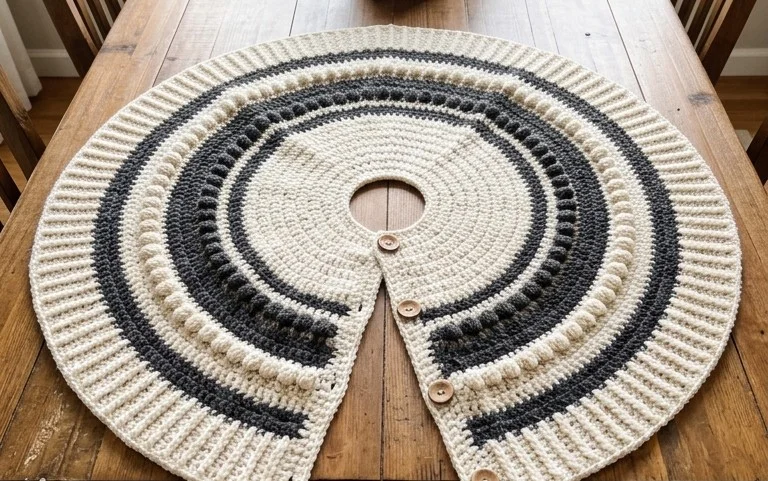
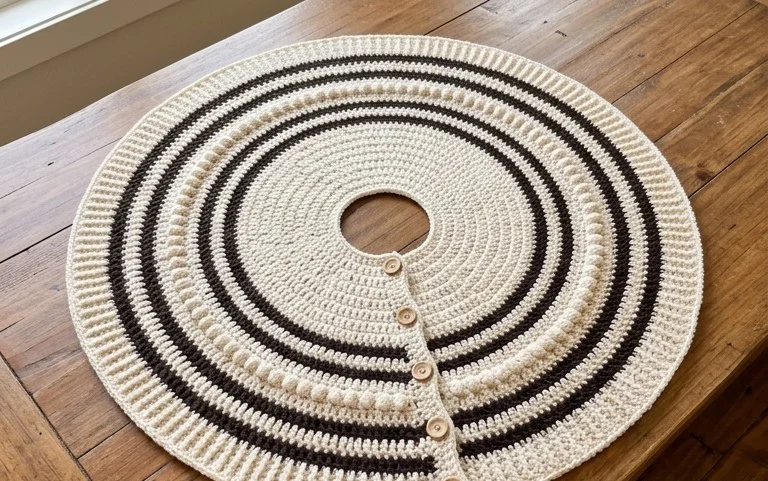
Deep forest green yarn worked into chunky, rounded bobbles creates a holiday floor piece that feels like a soft sweater for your living room floor. This project suits beginners who want to move beyond flat rectangles and learn how to shape circular items with consistent increases. The heavy weight of the fabric helps the piece lay flat under a tree without shifting around, while the wooden buttons add a natural, handmade charm that feels high-end. You will practice managing stitch counts in each round and learn the simple technique for popping out consistent, rounded bobbles that add texture and depth to your seasonal decorations.
Why You Will Love This Pattern
This beginner-friendly project creates a structured, round cotton dishcloth that serves as a staple for your kitchen. You will appreciate the speed at which this pattern works up, as it utilizes a simple, repetitive stitch pattern that requires minimal focus once the foundation is set. Because it uses medium-weight cotton yarn, the final result provides the ideal amount of friction for cleaning dishes without scratching delicate surfaces. It is also a smart way to use up those leftover partial skeins of cotton yarn sitting in your stash.
I managed to finish three of these in one afternoon while watching a movie. The texture is perfect for scrubbing, and they hold up beautifully in the washing machine.
— Sarah, home crafter
Pattern Overview & Skill Level
- Skill Level: Beginner
- Approximate Time: 45 to 60 minutes
- Construction: Worked in joined rounds, starting from a center point and expanding outward.
- Finished Dimensions: 8 inches in diameter.
Materials & Supplies Needed
- Yarn: Worsted weight (#4) 100% cotton yarn, approximately 50 yards per dishcloth. Solid colors show texture best, but variegated yarns add visual interest.
- Hook Size: 5.0 mm (H-8).
- Notions: Yarn needle for weaving ends, stitch marker for keeping track of the round start.
- Yarn Substitutions: You may use a cotton-acrylic blend, but note that 100% cotton is more absorbent and heat-resistant. Using a lighter weight yarn will result in a smaller dishcloth unless you increase the number of rounds.
Stitch Guide & Abbreviations (US Terms)
- ch = chain
- st/sts = stitch/stitches
- sl st = slip stitch
- sc = single crochet
- dc = double crochet
- inc = increase (work 2 sts into the same space)
- MR = magic ring
Step-by-Step Pattern Instructions
Main Dishcloth Body
- Rnd 1: Start with a MR, ch 3 (counts as first dc), work 11 dc into the ring. Join with a sl st to the top of the beginning ch-3. (12 sts)
- Rnd 2: Ch 3, dc in same st, 2 dc in each st around. Join with a sl st to the top of the beginning ch-3. (24 sts)
- Rnd 3: Ch 3, *2 dc in next st, 1 dc in next st; repeat from * around. Join with a sl st to the top of the beginning ch-3. (36 sts)
- Rnd 4: Ch 3, dc in next st, *2 dc in next st, 1 dc in next two sts; repeat from * around. Join with a sl st to the top of the beginning ch-3. (48 sts)
- Rnd 5: Ch 3, dc in next two sts, *2 dc in next st, 1 dc in next three sts; repeat from * around. Join with a sl st to the top of the beginning ch-3. (60 sts)
- Rnd 6: Ch 3, dc in next three sts, *2 dc in next st, 1 dc in next four sts; repeat from * around. Join with a sl st to the top of the beginning ch-3. (72 sts)
- Rnd 7: Ch 1, sc in each st around. Join with a sl st to the first sc. Fasten off and weave in ends. (72 sts)
Care & Washing Instructions
- Machine wash in warm water on a gentle cycle to remove oils and food residue.
- Lay flat on a clean towel to air dry, as high heat in a tumble dryer can cause the cotton fibers to shrink.
- Reshape the cloth by hand while it is damp to ensure the circular edge stays flat after washing.
Pro Tips & Common Mistakes to Avoid
Maintain consistent tension throughout the rounds to prevent the circle from puckering or rippling. If your dishcloth starts to look like a bowl, your tension is likely too tight; if it looks wavy, your tension might be too loose or you are adding too many increases. Place a stitch marker in the first stitch of every round to avoid losing your count when you reach the joining step. When weaving in your ends, run the tail through several stitches in the opposite direction before trimming to ensure the cloth stays secure during heavy use. Adjusting the size is simple: continue the increase pattern of adding one extra stitch between increases for each additional round, but be aware this will consume more yarn.
Frequently Asked Questions
Can I use acrylic yarn instead of cotton?
While possible, acrylic yarn does not absorb water well and may melt if it touches a hot pan or surface. Stick to 100% cotton for kitchen items.
Is this pattern suitable for someone who has never crocheted before?
Yes, this pattern uses only basic stitches and clear, repetitive growth, making it a great choice for practicing consistent stitch tension.
How do I make the dishcloth larger?
You can add additional rounds by following the established increase pattern. Each new round adds 12 stitches to the total count.
Am I allowed to sell the dishcloths I make from this pattern?
You are welcome to sell finished items made from this pattern, provided you credit the designer and use your own original photographs.
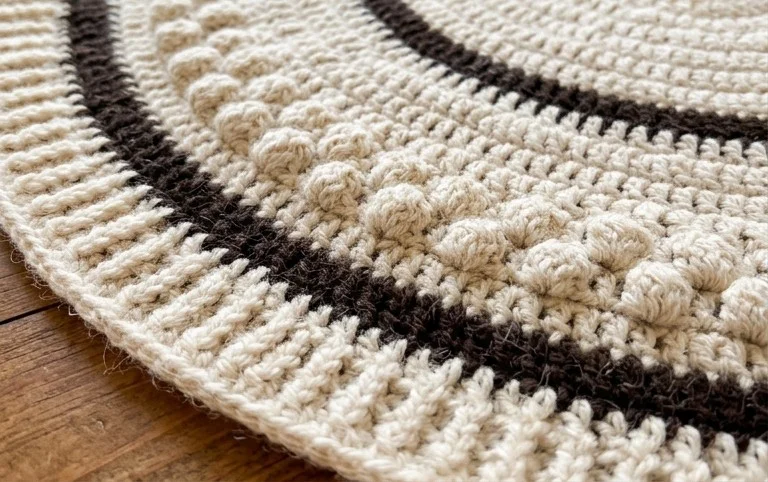
A finished holiday tree skirt brings a polished, custom feel to your home decor that lasts for years. You might try working this in a creamy white wool blend for a snowy aesthetic or adding extra rows of bobbles to create a larger diameter for bigger trees. Sharing a photo of your work on Instagram helps other makers find inspiration for their own holiday projects. Please take a look at the rest of my blog for more free crochet patterns to keep your hands busy this winter season.