Rustic Pines Beanie and Cowl: Free Crochet Pattern
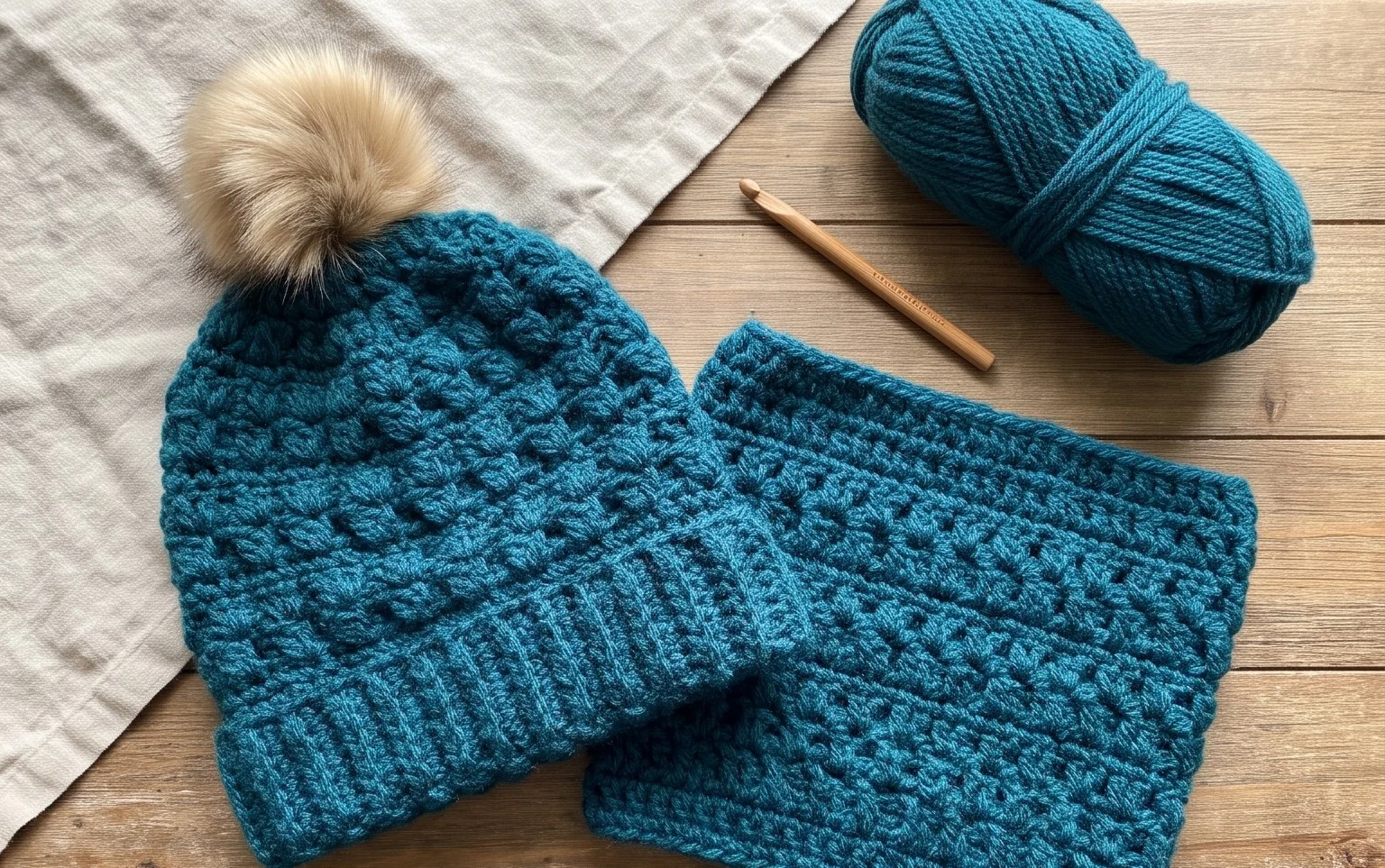
The matching beanie and cowl have a quiet woodland look, with pine-inspired texture that gives the fabric depth without making it feel stiff. Both pieces feel warm and comfortable against cool weather, and the coordinated finish makes them satisfying to wear together or separately. Beginners can take their time learning the repeating crochet stitch and watching the fabric build row by row. Gift makers get a useful handmade set that can be finished in a favorite color, while home decor lovers may enjoy displaying the set on a wooden peg or basket when it is not in use. The crochet-along format gives you a clear path through the stitch pattern and shaping, with practical notes to help keep the texture even. Choose a soft yarn with good stitch definition, and you’ll have a cozy project to reach for when the temperature drops.
Why You’ll Love This Pattern
This square cotton dishcloth is worked in simple single crochet rows, so the fabric is sturdy, absorbent, and easy to keep even. The pattern uses one stitch throughout and has no shaping, seams, or complicated finishing. It is a good first project for practicing consistent tension and counting stitches, and the repeated rows make it easy to pick up between other tasks. A small ball of cotton yarn is enough for one cloth, making it useful for trying a new color or using up a partial skein.
A crocheter’s sample review: I made mine over two evenings, and the straight rows helped me get comfortable counting without losing my place.
I made mine over two evenings, and the straight rows helped me get comfortable counting without losing my place.
— Maya, beginner crocheter
Pattern Overview & Skill Level
- Skill Level: Beginner. You need to make a foundation chain and single crochet stitches.
- Approximate Time: About 2–3 hours, depending on your pace and how often you stop to check your stitch count.
- Construction: The cloth is worked flat in turned rows from the bottom edge upward. There is no border or seam.
- Finished Dimensions & Sizing: About 9 × 9 inches (23 × 23 cm) after washing and drying flat. Small differences are normal if your gauge varies.
- Gauge: 14 single crochet stitches and 16 rows measure about 4 inches (10 cm) using the recommended hook. Gauge affects the final size, so check it before starting if you want the stated dimensions.
Materials & Supplies Needed
- Yarn: About 90 yards (82 m) of worsted-weight (#4) 100% cotton yarn. One solid color is easiest for seeing your stitches. Cotton holds up well to frequent washing and gives the cloth a firm texture.
- Hook: 5.0 mm / H-8 crochet hook. If your stitches are tight, try 5.5 mm; if they are loose, try 4.5 mm and check the gauge again.
- Notions: Tapestry needle for weaving in the two yarn ends, scissors, and a ruler or tape measure for checking gauge and finished size. A stitch marker is optional.
- Substitutions: A similar-thickness cotton or cotton-linen yarn can work. A thinner yarn will make a smaller, lighter cloth, while a thicker yarn will make a larger, denser one and use more yardage. Acrylic is less absorbent than cotton, so it may not work as well for wiping dishes.
Stitch Guide & Abbreviations (US Terms)
- ch: Chain.
- sc: Single crochet. Insert the hook into the stitch, yarn over and pull up a loop, then yarn over and pull through both loops on the hook.
- st: Stitch.
- sts: Stitches.
- rep: Repeat.
- Turning chain: The chain made at the start of a row to bring the hook to working height. In this pattern, it does not count as a stitch.
Step-by-Step Pattern Instructions
Use US crochet terms throughout. Keep the same number of stitches in each row; working into the turning chain by mistake can add an extra stitch at the edge. The starting chain does not count as a row.
Dishcloth
- Foundation: Ch 33. Make the chain loosely enough that the bottom edge does not pull in.
- Row 1: Sc in the second ch from the hook and in each ch across. Turn. (32 sts)
- Rows 2–36: Ch 1, sc in each st across, then turn. The ch 1 does not count as a stitch. (32 sts in each row)
After Row 36, fasten off, leaving a tail of about 6 inches (15 cm). Pull the tail through the last loop to secure it. Use the tapestry needle to weave each end through several stitches on the back of the cloth, changing direction once so the end is less likely to work loose. Trim the extra yarn without cutting into the fabric. Measure the cloth before washing; the finished size may vary slightly with personal tension.
Care & Washing Instructions
- For cotton yarn, machine wash with like colors in warm water, up to about 40°C (104°F), or follow the yarn label if it gives different directions.
- Dry flat or tumble dry on low heat; high heat can shrink or roughen some cotton yarns.
- While damp, smooth the edges and reshape the cloth to a square. Blocking is optional, but gentle reshaping helps even out the rows.
Pro Tips & Common Mistakes to Avoid
- Keep your turning chain at one chain and do not work into it. It is only for height, and counting it as a stitch will make the row wider.
- Count all 32 stitches at the end of each row, especially the first few. A removable marker in the first stitch can help you see where to place the final stitch of the next row.
- Keep your tension steady rather than pulling the foundation chain tight. If the first edge is narrower than the top edge, redo the chain with a slightly larger hook or make each chain more loosely.
- For a larger cloth, add an even number of chains and work the same number of single crochet stitches in every row. More stitches widen the cloth, while more rows make it taller; both changes use additional yarn.
Frequently Asked Questions
Can I use a different yarn fiber?
Yes, but choose a yarn close to worsted weight so the cloth remains a useful size. Cotton is absorbent and tolerates frequent washing. A cotton blend may feel softer, while acrylic tends to absorb less water. Check the new yarn’s label for washing and drying guidance.
How can I make the dishcloth smaller or larger?
Change the starting chain to adjust the width, then work the same number of single crochet stitches across each row. Add or remove rows to change the height. Keep the edges straight by maintaining the same stitch count from row to row, and allow extra yarn for a larger cloth.
Is this pattern suitable for a first crochet project?
Yes. It uses only chains and single crochet stitches, with no increases, decreases, or joining. The main challenge is keeping 32 stitches in every row. If your edges look uneven, pause to count before continuing rather than trying to correct the width later.
May I sell dishcloths made from this pattern?
Check the designer’s terms before selling finished items, and follow any requirements about credit or sales. If you give the cloth as a gift, include the yarn’s care instructions so the recipient knows how to wash it.
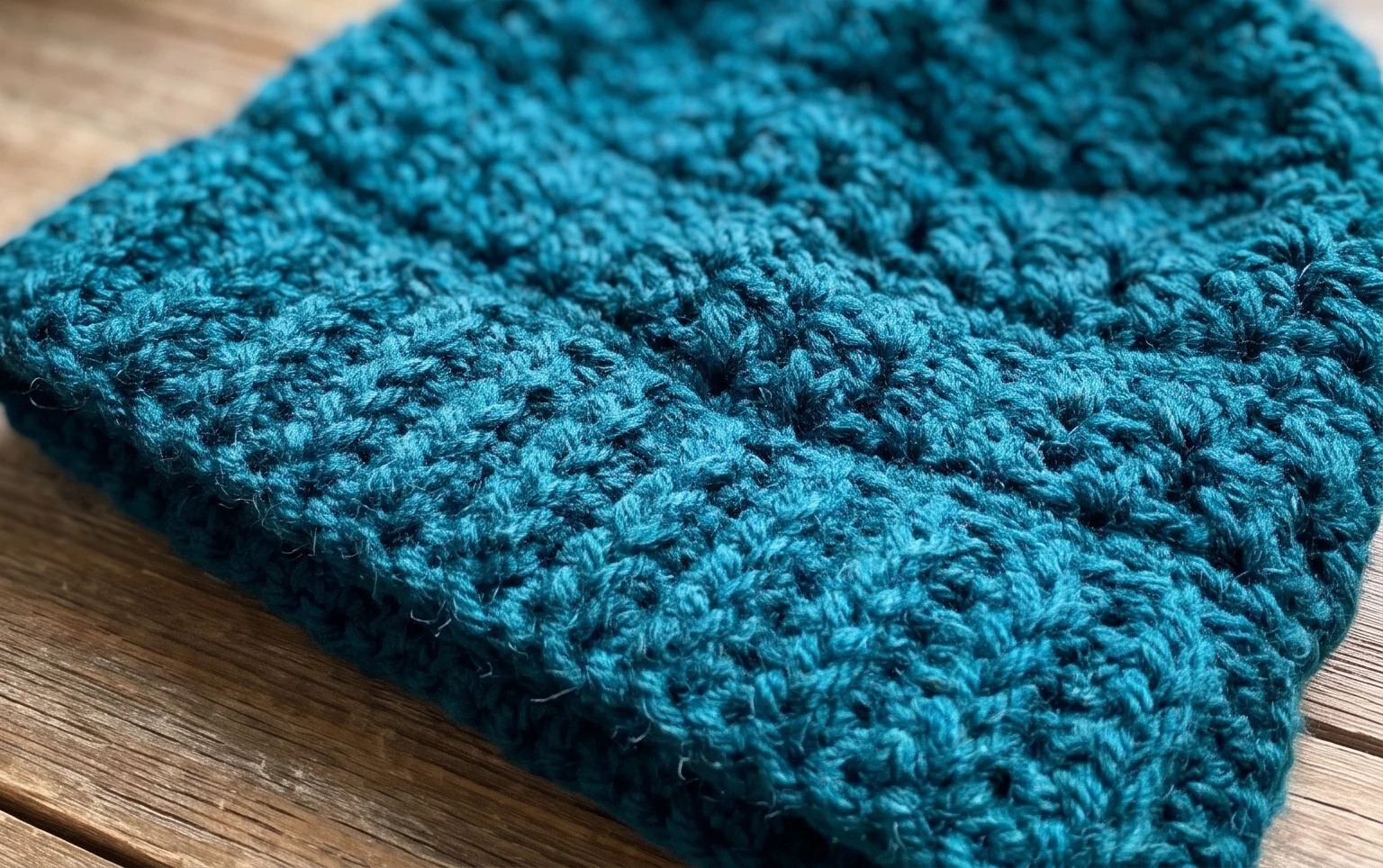
Finishing the beanie and cowl gives you a coordinated set with a soft feel and woodland texture that makes cold mornings more comfortable. If you want a small change, make the pair in deep spruce green instead of the sample shade, keeping the same yarn weight and hook so the size stays close to the pattern measurements. Check the fit before weaving in the ends, especially around the beanie brim, where a snug but comfortable edge helps it stay in place. The set also makes a thoughtful handmade gift when you know the recipient’s preferred colors and head size. Share a photo of your finished pieces on Pinterest or your favorite social platform; seeing how the yarn and texture look in other colors can give fellow crocheters useful ideas. Explore more free crochet patterns on the blog when you’re ready to choose your next project.